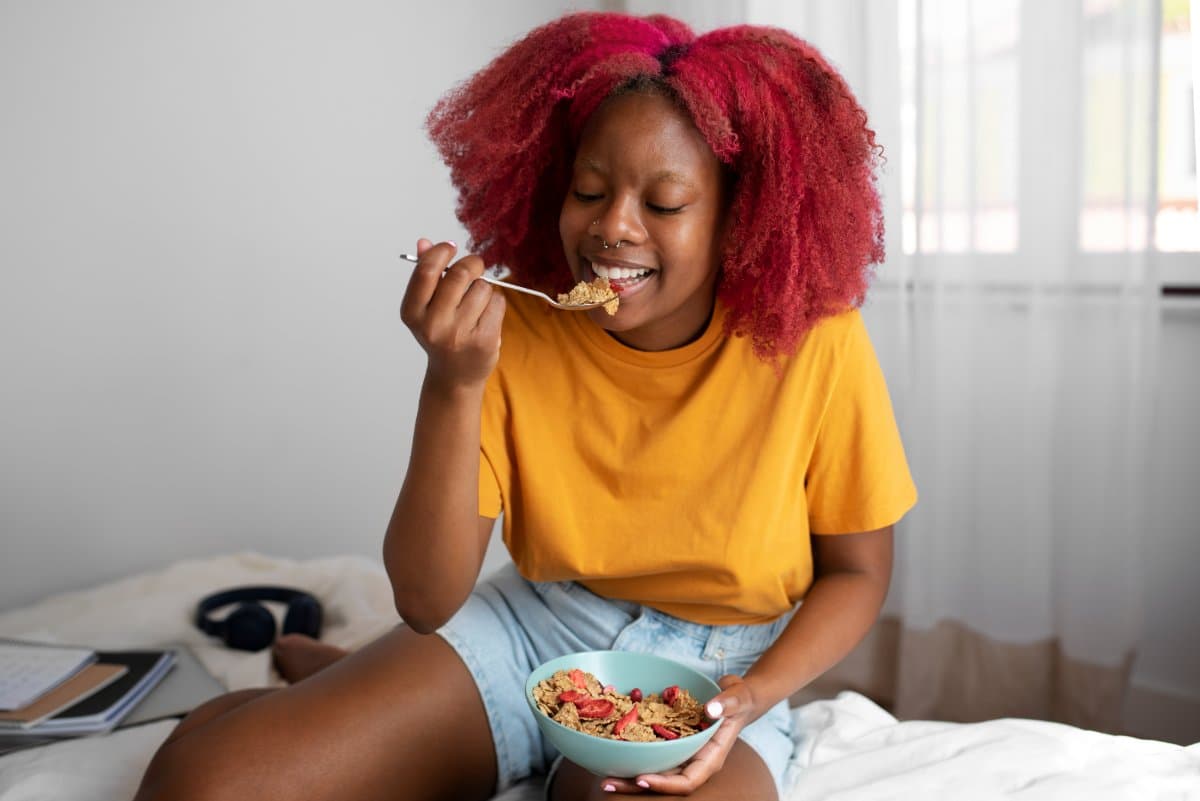
The cravings, the low mood, the sudden urge to reorganise your whole life or cry at an advert, the week before your period is real, it has a name, and there is genuine science on how food can steady it.
What is actually happening
The two weeks after ovulation are called the luteal phase. During this window, progesterone rises and then, if you are not pregnant, both progesterone and oestrogen fall away sharply just before your period. That hormonal shift is behind the familiar cluster of premenstrual symptoms: irritability and low mood, bloating, breast tenderness, fatigue, and cravings, especially for sugar and carbohydrates.
There is also a metabolic piece. Insulin sensitivity tends to dip in the luteal phase, which means your blood sugar can swing more easily, and blood-sugar crashes feed both cravings and mood dips. This is why steady eating matters more in this phase than at any other point in your cycle.
You are not imagining it, and you are not weak. Your body is moving through a real hormonal shift, and food is one of the gentlest ways to support it.
What the research says helps
Magnesium and vitamin B6
This pairing has some of the most encouraging evidence in the premenstrual literature. A double-blind trial found that magnesium combined with vitamin B6 was more effective than either magnesium alone or placebo at reducing the severity of PMS symptoms.1 A separate double-blind study reached a similar conclusion, with both magnesium and B6 significantly lowering PMS severity scores.2 Magnesium-rich foods include dark leafy greens, beans, nuts, seeds, wholegrains and dark chocolate; B6 shows up in bananas, poultry, fish, chickpeas and potatoes.
Steady, complex carbohydrates
Because blood sugar is more volatile in this phase, complex carbohydrates, oats, wholegrains, beans, sweet potato, help keep energy and mood level and take the sharp edge off cravings. Pairing them with protein and healthy fat slows the release further. Reaching for a wholegrain option rather than a sugary quick fix is a small change that pays off in this specific window.
Enough of the basics
Adequate protein, plenty of vegetables and fibre, and staying hydrated all support a smoother luteal phase. Fibre in particular helps the body clear excess oestrogen through the gut, which is part of keeping hormones in balance.
A practical luteal-phase plate
- Breakfast: oats or eggs with something fibrous, rather than sugary cereal, to start the day steady.
- Snacks: nuts, dark chocolate, fruit with yoghurt, magnesium and satisfaction in one.
- Dinner: complex carbs plus protein and vegetables, e.g. beans and wholegrains with plenty of greens.
- Go easy on: big sugar hits and excess caffeine and alcohol, which can worsen mood swings and disrupt sleep.
When to seek more support
For most women, premenstrual symptoms are uncomfortable but manageable. For some, though, they are severe enough to disrupt daily life, this may be premenstrual dysphoric disorder (PMDD), which is a recognised medical condition and deserves proper care. If your low mood is intense, persistent, or affects your ability to function, please talk to a clinician. Food helps with the everyday dip. It is not a treatment for PMDD or depression.
References
- Fathizadeh N, et al. Evaluating the effect of magnesium and magnesium plus vitamin B6 supplement on the severity of premenstrual syndrome. 2010. pubmed.ncbi.nlm.nih.gov/22069417
- Ebrahimi E, et al. Effects of magnesium and vitamin B6 on the severity of premenstrual syndrome symptoms (double-blind trial). 2012. pubmed.ncbi.nlm.nih.gov/25276694